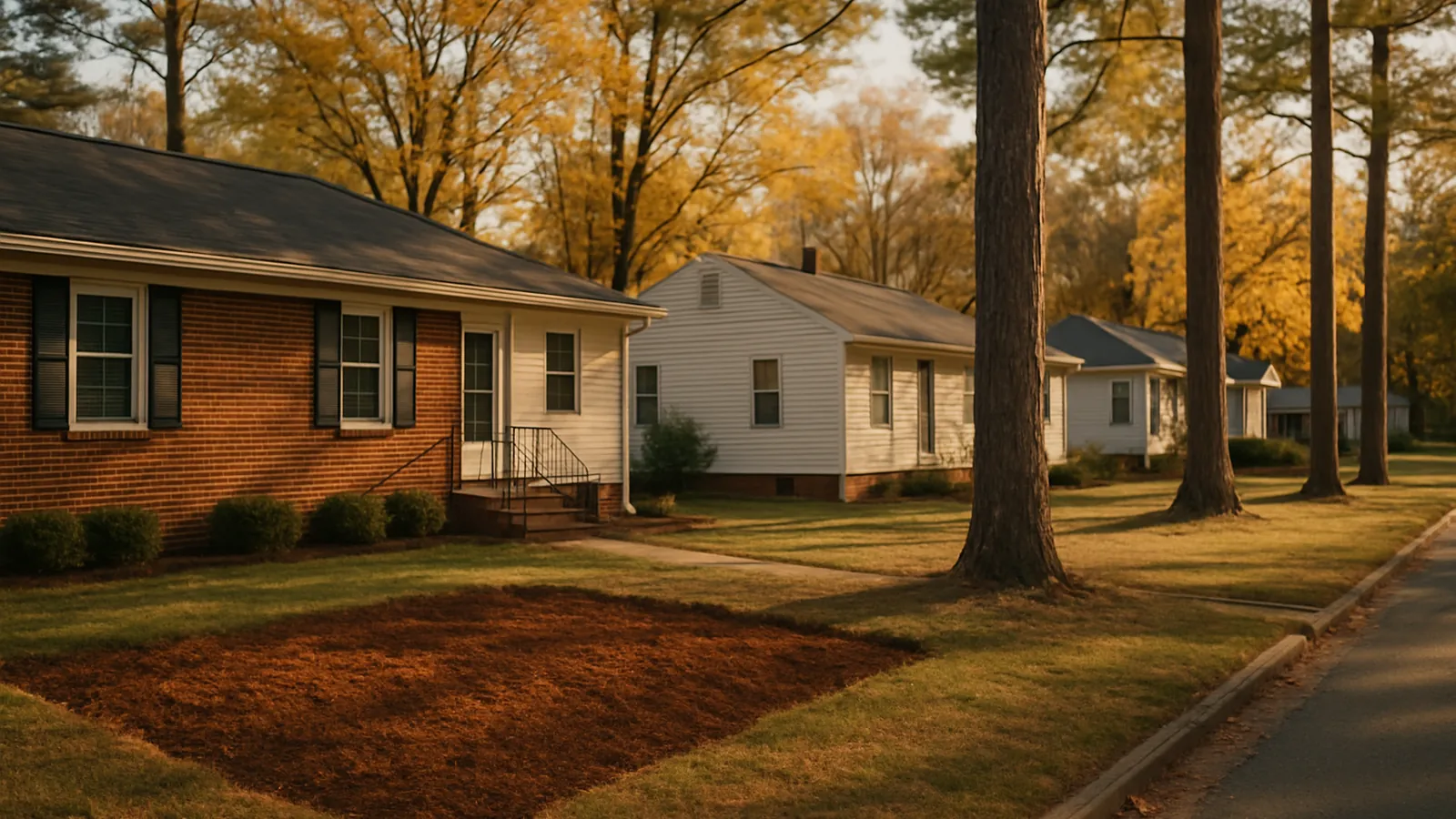
Attic mold removal in Wilmington runs $1,500–$5,000: HEPA cleaning of affected sheathing, insulation replacement where it absorbed moisture, and correction — sealing ceiling gaps, re-routing bath fans outside, clearing blocked soffit intake. Sheathing is cleaned in place, not replaced.
Telling storm damage from condensation, what the work involves, and what stops the return.
Reading the stain
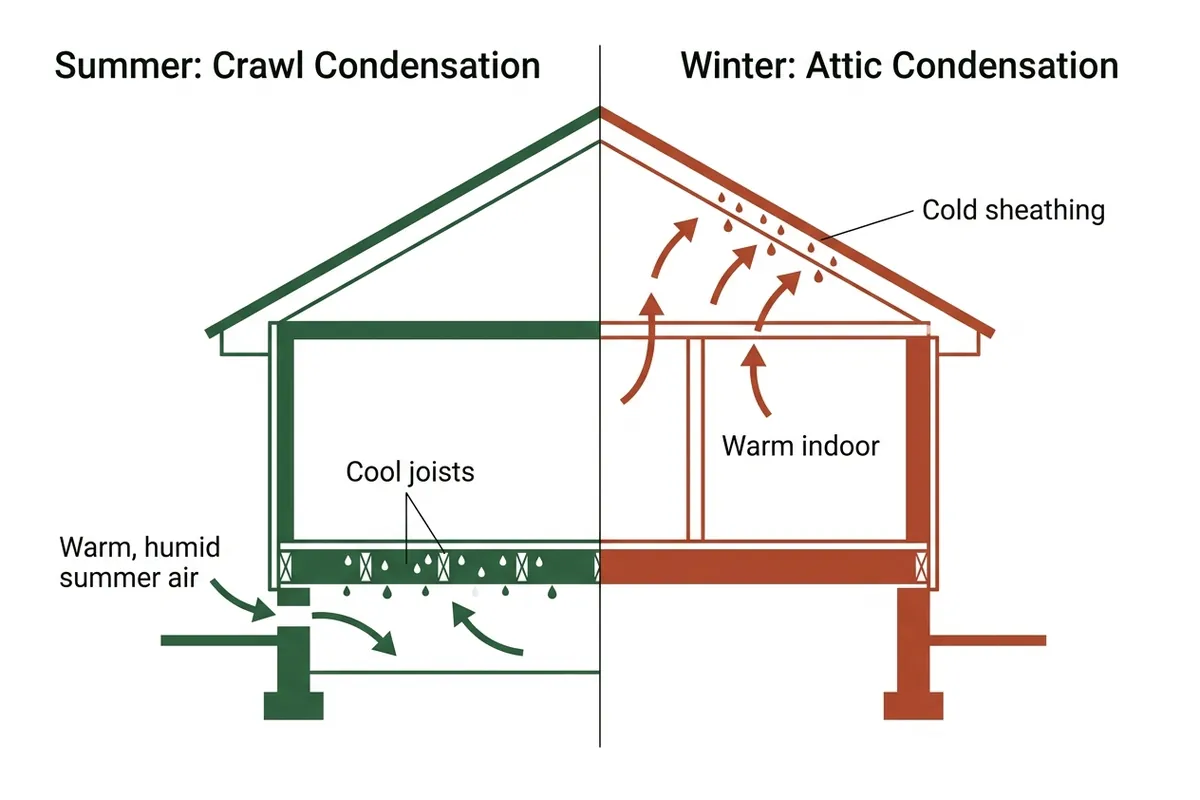
The pattern tells you the cause before anyone climbs a ladder. Storm-driven water writes a localized story: a dark patch tracing to a plumbing boot, a valley, chimney flashing, or a run of lifted shingles, often with a rusty ring and a clear path downhill. On this coast that is a seasonal event class — wind-driven rain finds openings that a calm-weather roof never leaks through. Condensation writes a broad one: even darkening across large areas of sheathing, worst on the north slope, from humid indoor air meeting a cooler surface.
The first is a roofing repair with a mold component. The second is an air-sealing and ventilation problem that happens to appear as mold, and no amount of cleaning fixes it while the moist air keeps arriving.
Where the moist air comes from
Warm humid air rises and finds every opening: recessed lights, the attic hatch, plumbing and wiring penetrations, gaps at top plates. The most common single culprit in Wilmington homes is a bath fan terminating in the attic rather than through the roof or gable — a shower’s worth of steam delivered onto sheathing twice a day, in a climate where nothing dries on its own. Blocked soffit vents run a close second: insulation pushed against the eaves during a top-up strangles the intake air that was supposed to carry moisture out the ridge. Both are inexpensive to correct and both are permanent once corrected.
What the job includes
| Step | What happens | Why it matters |
|---|---|---|
| Containment at the hatch | Barrier and negative air before anything is disturbed | Keeps spores out of the living space |
| Insulation assessment | Wet or contaminated batts and blown-in come out | Wet insulation insulates nothing and holds the problem |
| Sheathing treatment | HEPA vacuum, controlled cleaning, treatment | Cleaned in place — replacement only for soft wood |
| Air sealing | Ceiling penetrations, hatch, can lights sealed | Stops the moist air at its origin |
| Ventilation correction | Bath fans routed outside; soffit intake cleared | Restores the drying path the attic was designed with |
The first storm season after the work
A corrected attic proves itself during the season that caused the problem, so look once in late summer. The sheathing should be uniformly dry, the new insulation undisturbed, and you should feel outside air moving from the soffits toward the ridge. Then check the things that undo it, which are almost always human: a bath fan re-routed into the attic during a remodel, a hatch or can light left unsealed, storage stacked over the soffit vents. On the coast, add one more — walk the roof line from the ground after any named storm and look for lifted shingles or displaced flashing, because the cheapest attic remediation is the leak you caught in October. Pricing is in the cost guide.
Attic questions, straight answers
How does mold get into a Wilmington attic?
Two ways that look different. Storm-driven rain finds roof penetrations and makes a localized stain that traces to a boot, a valley, or lifted shingles - common after a tropical system. Condensation makes broad, even darkening across sheathing and comes from humid indoor air leaking up through ceiling gaps and bath fans that dump into the attic.
What does attic mold removal cost?
Most attic jobs run $1,500-$5,000. The number moves on square footage of affected sheathing, whether insulation must be removed and replaced, and what correction the attic needs - sealing ceiling penetrations, re-routing bath fans outside, restoring blocked soffit vents.
Does the roof have to come off?
Almost never. Sheathing is treated in place with HEPA vacuuming and controlled cleaning; replacement is only for wood that has gone structurally soft. A company that opens with a roof-replacement quote for attic mold is selling a roof, and that deserves a second opinion.
We just had storm damage. Which comes first?
The roof, then the attic. Cleaning sheathing while water still enters accomplishes nothing. Get the envelope closed, document everything for the claim, then remediate - and if the water was substantial, the drying scope may matter more than the cleaning.
Is attic ventilation enough on the coast?
Only if the intake actually works. Blocked soffit vents are the most common failure we find - insulation pushed tight against the eaves during a top-up strangles the airflow that was supposed to carry moisture out the ridge. Ventilation also cannot fix a bath fan discharging into the attic; that is an air-sealing problem.
Get a free Wilmington mold inspection
Tell us what you’re seeing — a musty smell near the floor, dark streaks on attic sheathing, staining on a wall, water standing against the foundation — and we’ll schedule an inspection that goes into the crawl space and the attic. We reply the same business day.