Mold removal in Wilmington costs $1,500–$6,000 for most remediation, $2,500–$9,000 for crawl space work with barrier and drainage, $1,500–$5,000 for attics, and $1,000–$4,000 for HVAC systems. Whole-home or structural jobs reach $6,000–$15,000.
What each range buys, why the water correction sets the real number, and how to compare two very different-looking bids.
Wilmington mold prices by job
| Job | Typical range | What it covers |
|---|---|---|
| Living space remediation | $1,500–$6,000 | Containment with negative air, removal of affected porous material, HEPA cleaning, drying to a measured target |
| Crawl space remediation | $2,500–$9,000 | Framing cleaning, contaminated insulation removal, sealed vapor barrier over damp ground, storm water correction, corroded connector assessment, dehumidification |
| Attic remediation | $1,500–$5,000 | Sheathing cleaned in place, insulation replaced where wet, ceiling air sealing, bath fans re-routed outside, storm-damaged flashing flagged |
| HVAC and duct cleanup | $1,000–$4,000 | Coil and drain pan cleaning, condensate correction, lined flex duct replacement, return plenum sealing |
| Inspection and testing | Free–$900 | Visual inspection with moisture readings free; lab sampling priced by number of samples |
| Water damage response | $1,000–$8,000 | Same-day extraction, selective demolition, metered structural drying, daily monitoring logs |
| Whole-home or structural | $6,000–$15,000 | Multiple zones, subfloor or framing carpentry, full moisture system |
The line that decides your real cost
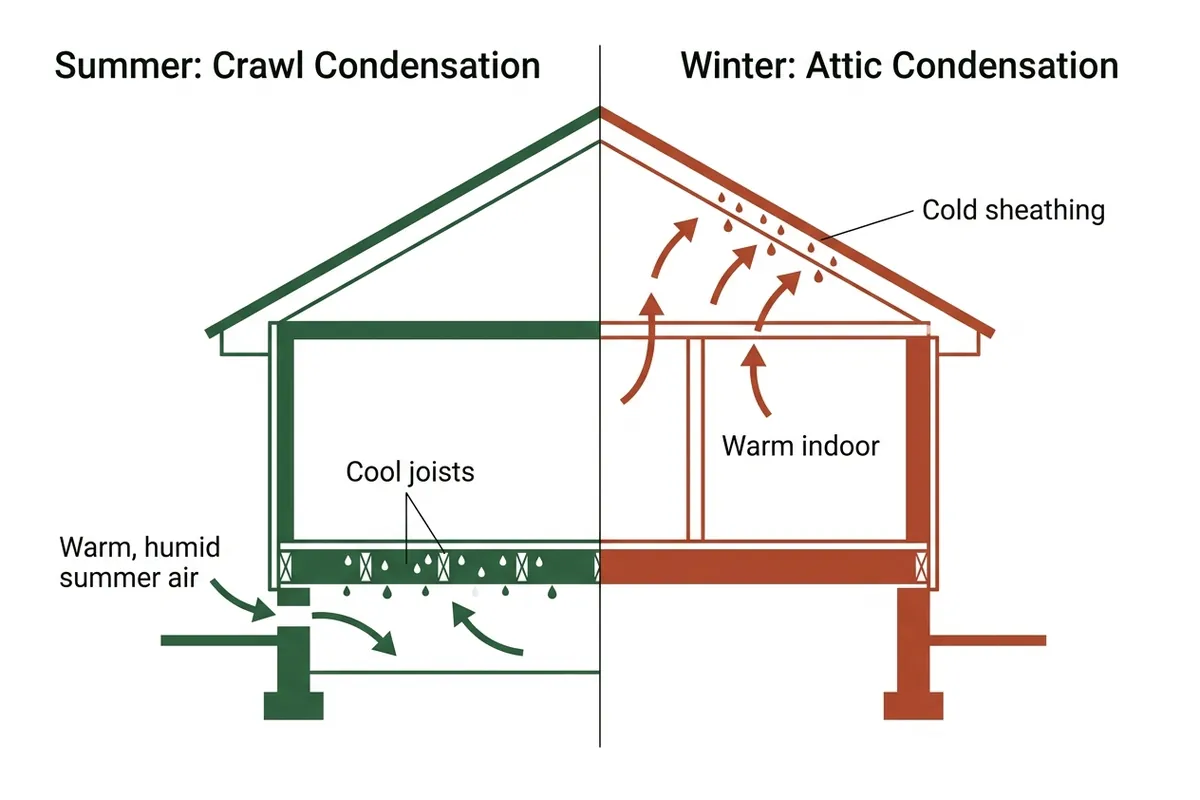
Two bids on the same house can differ by four thousand dollars and both be honest — if one of them priced the water. Wilmington gets roughly 58 inches of rain a year with no dry season, sits on a high coastal water table, and carries salt air that holds moisture on whatever it settles on. A remediation that cleans the framing and leaves the crawl space ground bare will be cheaper on paper and will be repeated, because nothing in this climate is going to dry that space for you. The honest comparison is not price against price; it is scope against scope, and the question is whether each bid names the moisture source and prices its correction.
What moves an estimate up or down
| Factor | Effect | Why |
|---|---|---|
| Porous material affected | Up, substantially | Drywall, insulation, and subfloor get removed and rebuilt, not cleaned |
| Growth reached framing | Up | Structural drying and sometimes carpentry enter the scope |
| Pier crawl or tight beach lot | Up | Coastal access and staging slow every phase of the work |
| Corroded straps or hangers found | Up | Salt-driven corrosion means some connectors get replaced |
| Existing barrier is intact | Down | Repair and seal beats full replacement when the material is sound |
| Caught within 48 hours of a leak | Down, dramatically | Drying is a fraction of remediation — see the water damage page |
Phasing when the number is more than you planned
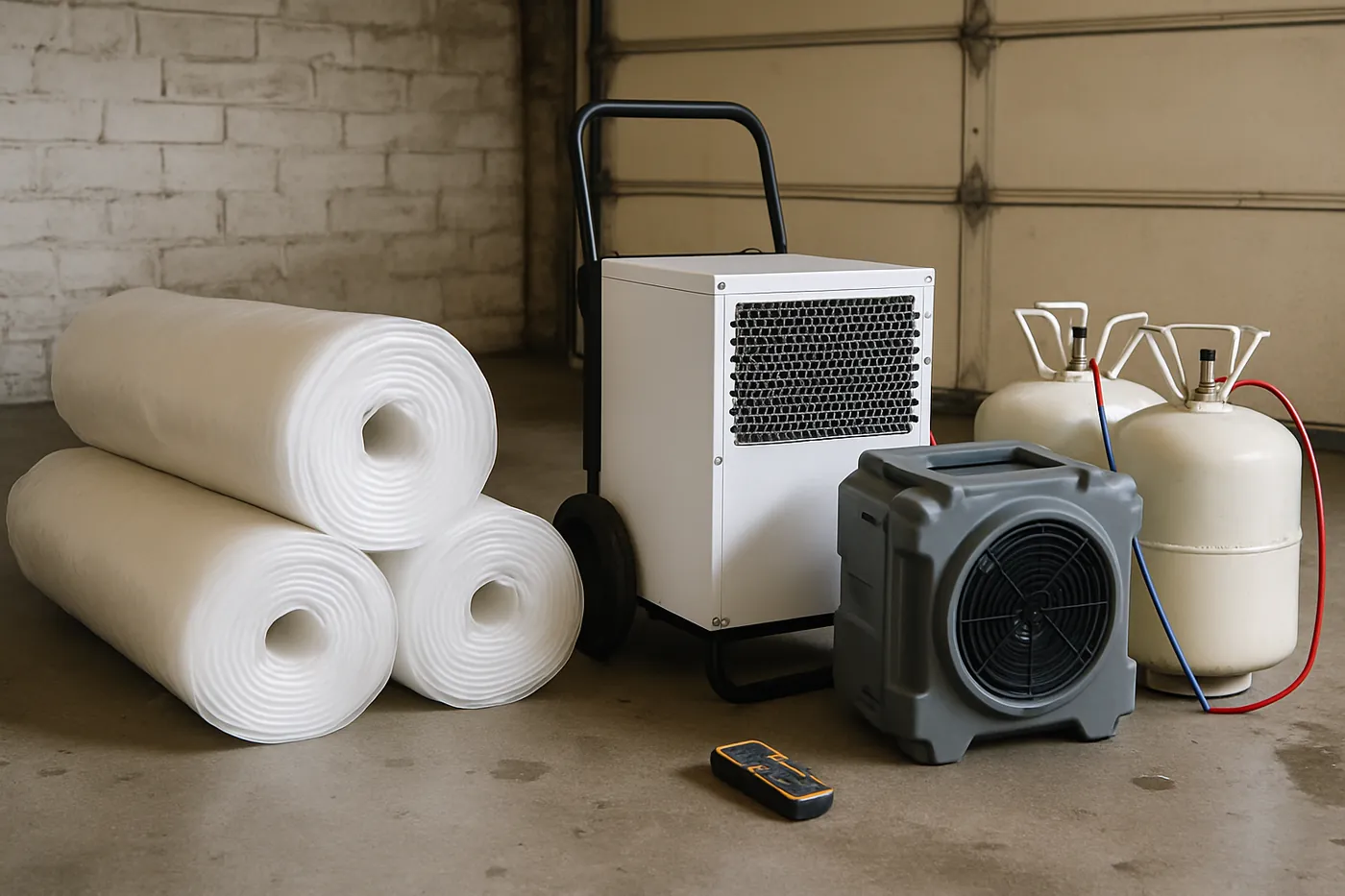
Not every scope has to happen at once, and we will say so. Where budget is the constraint, the order that protects you is: stop the bulk water, then seal the ground, then remediate, then add mechanical drying. Doing it in that sequence means no phase gets redone; doing it in reverse means paying twice for the same framing. What phasing should never skip is the ground seal, because on a coast with no dry season that single item decides how fast everything else deteriorates. Ask for the scope in stages with fixed prices per stage — ours are written that way on request.
Cost questions, straight answers
What's the average mold removal cost in Wilmington?
There isn't an average worth quoting, because the job classes barely overlap. A single wall or closet often lands at $1,500 to $3,000; a multi-room job with material removal runs $3,000 to $6,000. Coastal crawl space work with sealed ground and dehumidification runs $2,500 to $9,000, attic remediation $1,500 to $5,000, and HVAC cleanup $1,000 to $4,000.
Why is crawl space work usually the biggest number?
Because the correction is bigger than the cleaning. Remediating the framing is straightforward; stopping the recurrence means sealing bare ground that sits near a high water table, correcting where storm water goes, and adding dehumidification - because this coast has no dry season to help. You are buying the fix for the cause, not the symptom.
Why do two Wilmington estimates differ by thousands?
Almost always because one priced the moisture correction and the other didn't. A quote covering HEPA cleaning alone will always be cheaper and will always be temporary in a climate with no dry season. Compare what each bid says about where the water comes from - if one never mentions it, you are not comparing the same job.
Does North Carolina license mold contractors, and does that affect price?
It licenses none, which affects price by removing the floor. North Carolina issues no mold-specific contractor license, so anyone can quote this work at any number. The practical protection is asking which written standard the work follows - IICRC S520 is the one that exists - and getting the full scope in writing before you commit.
Will insurance cover any of this?
Cause decides, and on the coast that means wind versus flood. Mold after wind-driven rain through storm-damaged roofing or a burst line is frequently covered to a sublimit, commonly $5,000 to $10,000. Mold from humidity, seepage, or storm surge is excluded - surge requires separate flood coverage entirely.
Do you charge for the inspection?
We don't charge for the inspection. Crawl space and attic entry, moisture readings at named locations, the exterior water path, photographs, and a written scope with fixed line prices are free - including the visits that end with 'extend the downspouts and seal the ground, and you're done.'
Get a free Wilmington mold inspection
Tell us what you’re seeing — a musty smell near the floor, dark streaks on attic sheathing, staining on a wall, water standing against the foundation — and we’ll schedule an inspection that goes into the crawl space and the attic. We reply the same business day.