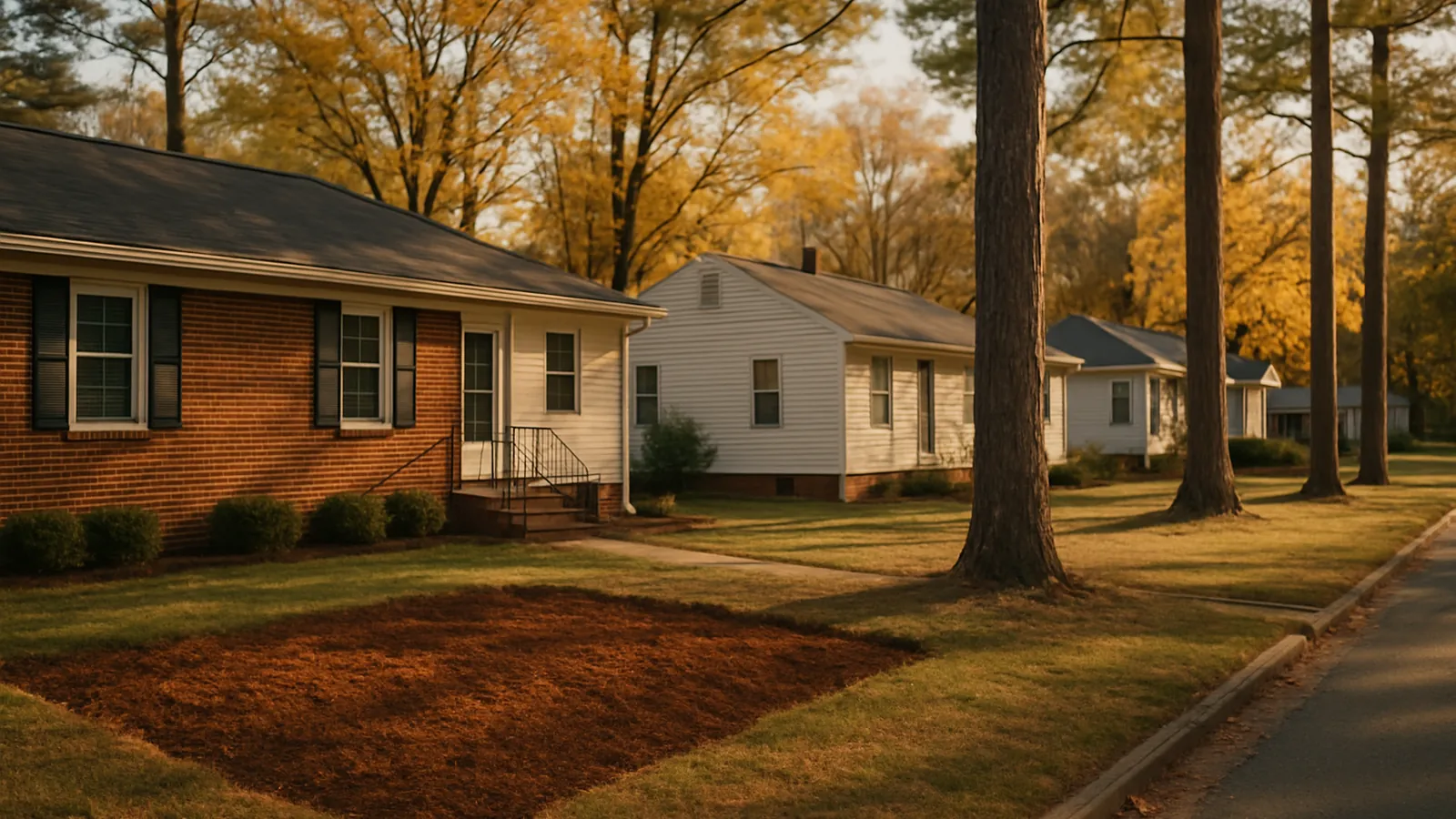
Crawl space mold removal in Wilmington runs $2,500–$9,000, covering framing remediation plus what stops recurrence: a sealed vapor barrier over damp ground, storm water correction, and a dehumidifier sized for a climate with no dry season. Dirt crawl spaces under older coastal housing are the usual source.
Why coastal crawl spaces never dry, what salt air adds, and the fix in order.
A dirt crawl space on the coast is a humidifier
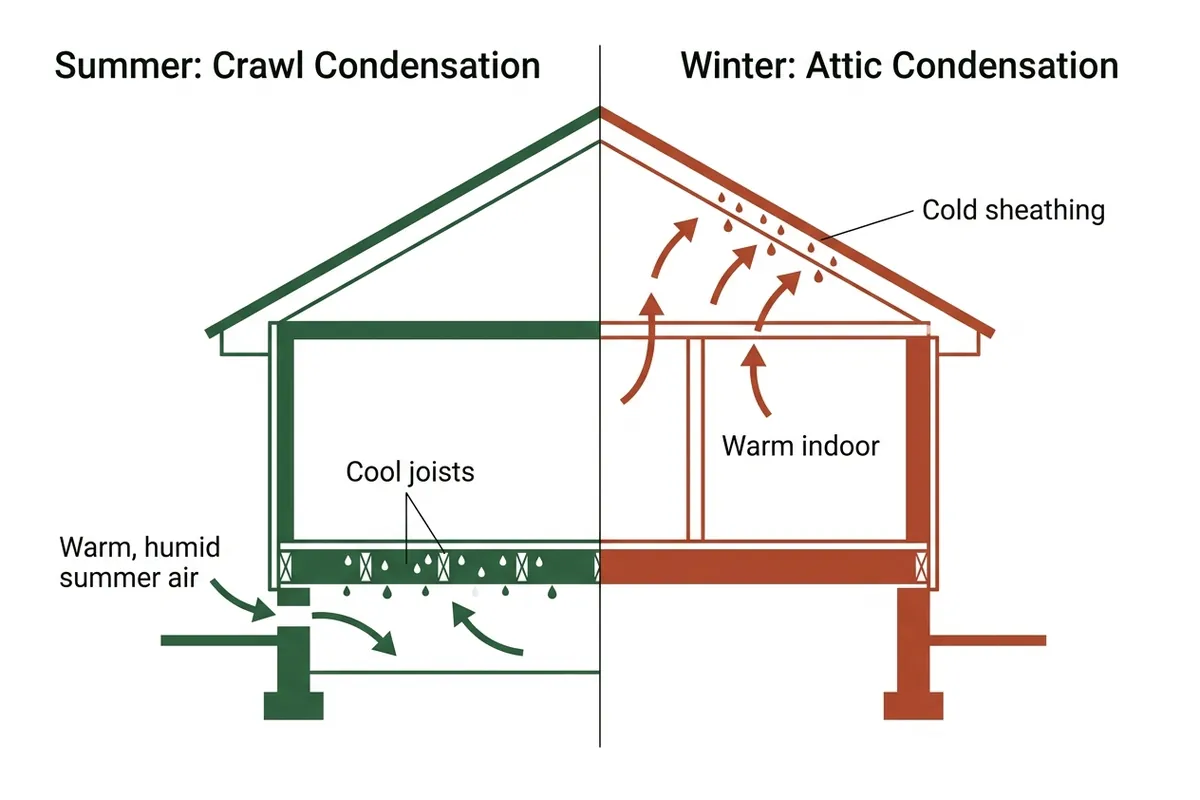
Much of Wilmington’s older housing — downtown, the historic districts, and a great deal of what stands around Wrightsville Beach — sits on crawl spaces with bare ground. That ground is close to a high coastal water table, so it is rarely dry, and every hour it releases water vapor into the space above it. The framing up there is cooler than the outside air through most of the year, which means the moisture does not simply pass through; it condenses on the joists.
Then there is the instinct that makes it worse: opening the vents. In a humid subtropical climate with no dry season, outside air is frequently wetter than the crawl space, so ventilation delivers moisture to cool surfaces rather than carrying it away. The vents that were supposed to dry the space are, for much of the year, feeding it.
What salt adds to the problem
This is the part that separates a coastal crawl space from an inland one. Salt carried in on sea air is hygroscopic — it attracts and holds water from the air onto whatever surface it has settled on. That means framing near the coast can carry a higher moisture content than the ambient humidity reading alone would predict, and it stays elevated longer after a wet stretch. Salt also accelerates corrosion, so the inspection reads metal as well as wood: joist hangers, hurricane straps, duct connections, and fasteners that are quietly losing section while the wood problem gets all the attention.
What the space tells us
| What we find | What it means | What it takes |
|---|---|---|
| White or gray growth on joists | Surface colony on damp wood — caught early | HEPA removal, barrier, dehumidification |
| Black staining on subfloor | Sustained wetting, often under a bath or kitchen | Remediation plus the leak source |
| Insulation fallen or hanging | It absorbed moisture until it lost its grip | Removal and replacement after drying |
| Rust on straps, hangers, ducts | Salt-accelerated corrosion — coastal signature | Assessment; some connectors need replacing |
| Standing water or saturated sand | Storm water or water table, not just humidity | Drainage correction first, always |
The fix, in the order that holds
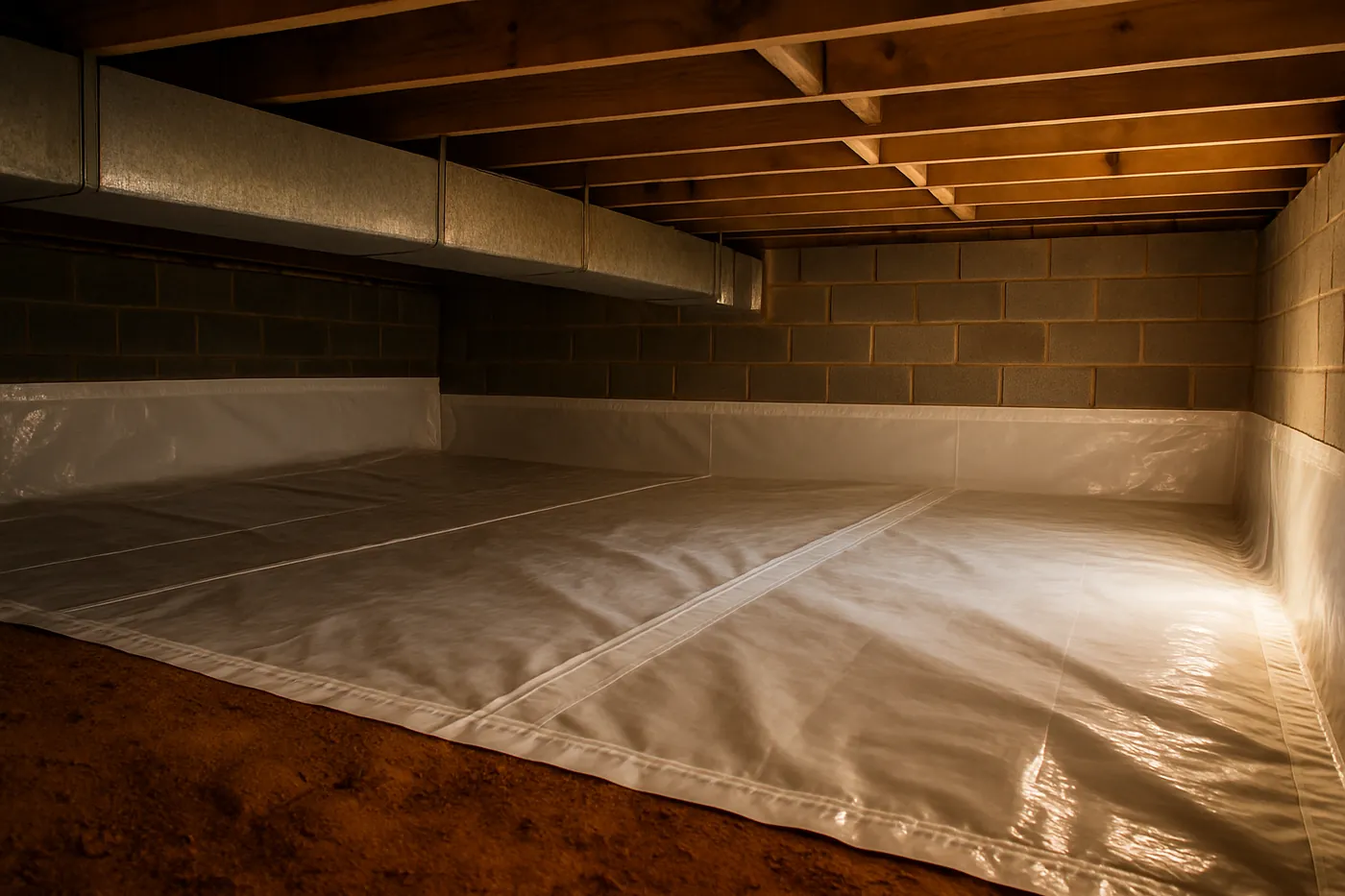
Bulk water first — where storm and roof water goes, whether the grade carries it away, whether the space needs a sump because the water table brings it up rather than in. Then the remediation: HEPA vacuum and wipe the framing, remove insulation that absorbed moisture, treat what remains. Then seal the ground with a real vapor barrier — overlapped, taped, run up the piers and walls — because bare coastal soil will re-humidify a clean crawl in a single season. Then, in nearly every case here, mechanical dehumidification sized for the space, because the outside air is not going to do it. Broader scope on the remediation page; every price in the cost guide.
Crawl space questions, straight answers
Why do Wilmington crawl spaces stay damp?
Because the ground under them is close to the water table and the air above them never dries out. A dirt crawl space is a continuous moisture source, and on the coast the outside air you would normally use to dry it is frequently wetter than the space itself - so open vents deliver humidity rather than removing it.
What does crawl space mold removal cost here?
Most crawl space jobs run $2,500-$9,000. Cleaning the framing is the smaller half; the number is driven by what stops the recurrence - a sealed vapor barrier over damp ground, correcting where storm water goes, and usually a dehumidifier sized for a climate that offers no dry season.
Is salt air really a factor under the house?
Salt air is really a factor under the house, and it is the coastal difference. Salt is hygroscopic - it pulls moisture from the air and holds it on the surfaces it has settled on, which keeps wood damper than the ambient reading suggests. It also accelerates corrosion on fasteners, straps, and ductwork, so a coastal crawl inspection looks at metal as well as wood.
What about flooding from storms?
Different problem, same space. Surge and heavy rain put bulk water into a crawl space, and bulk water is a restoration job on a 24-to-48-hour clock, not a mold remediation. If it happened during a named storm, document everything before cleanup - flood coverage is separate from your homeowners policy.
How do I know if the crawl space is my problem?
Open the hatch and use your nose - a musty smell at the opening is diagnostic. Then look for condensation on ductwork, insulation sagging or fallen, dark staining on joists, standing water or damp sand, and rust on metal connectors. Any one justifies the free inspection.
Get a free Wilmington mold inspection
Tell us what you’re seeing — a musty smell near the floor, dark streaks on attic sheathing, staining on a wall, water standing against the foundation — and we’ll schedule an inspection that goes into the crawl space and the attic. We reply the same business day.