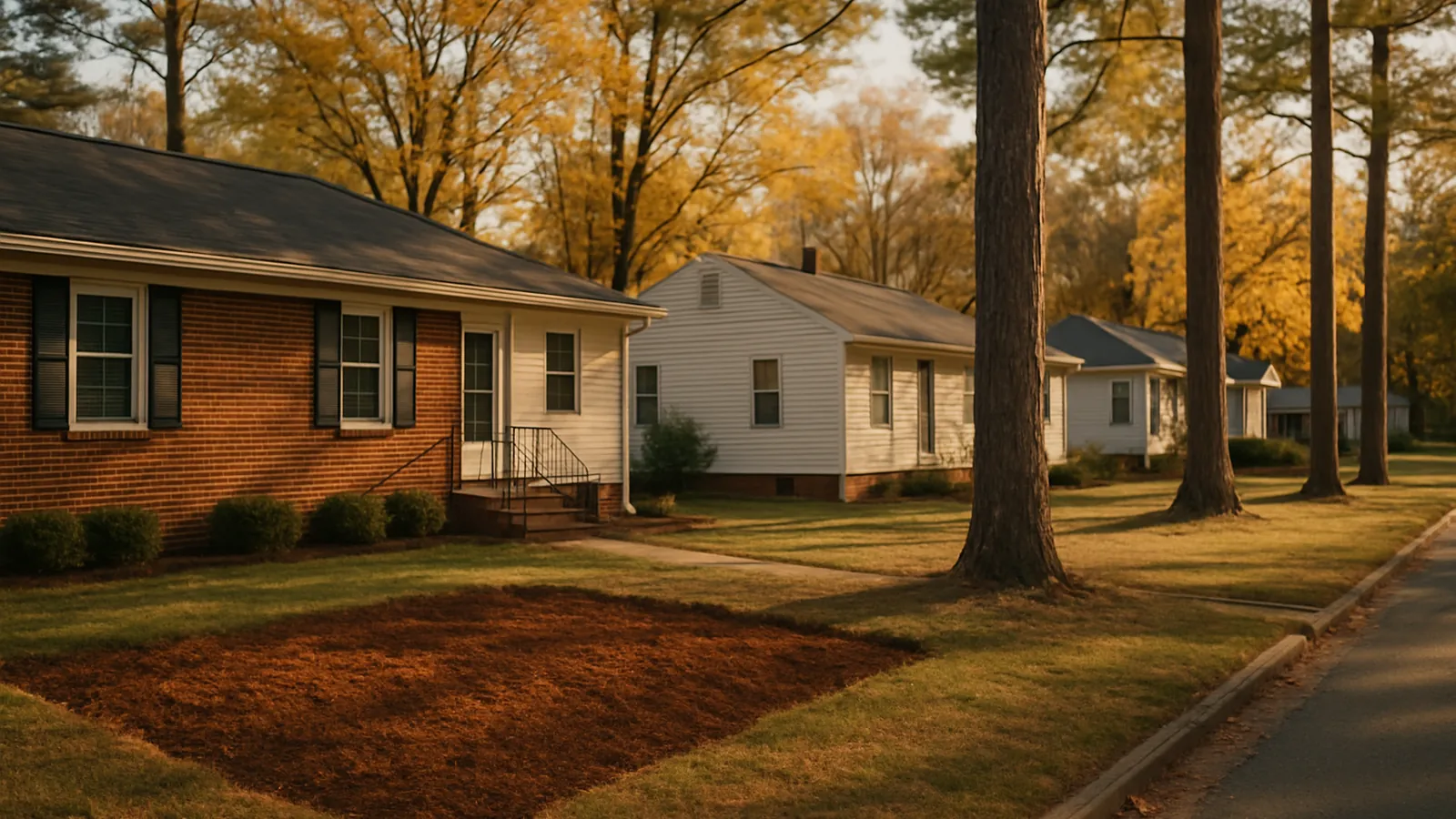
Mold remediation in Wilmington runs $1,500–$6,000 for most homes and $6,000–$15,000 for whole-home or structural work. Coastal scopes carry more moisture correction than inland ones because this climate has no dry season. North Carolina licenses no mold contractors — we work to IICRC S520.
The four coastal drivers, what the process involves, and how to judge a scope written for this climate.
Four forces, one house
Most markets have a mold mechanism. Wilmington has four, and they compound. First, humidity with no dry season — roughly 58 inches of rain a year in a humid subtropical climate where September alone averages nearly seven inches. Second, a high coastal water table, so ground moisture is close to the surface and crawl space dirt is rarely truly dry. Third, salt air, which is not just a corrosion story: salt is hygroscopic, meaning it attracts and holds moisture on the surfaces it settles on, and it accelerates the decay of wood and the corrosion of fasteners and coils. Fourth, storms — hurricanes and tropical systems that deliver bulk water on a schedule nobody controls. Carolina Beach recorded eighteen inches from a single September 2024 event.
Any one of those would sustain a mold problem. Together they mean a Wilmington house has no natural recovery window, which changes what a competent scope has to include.
The remediation, in the order that holds
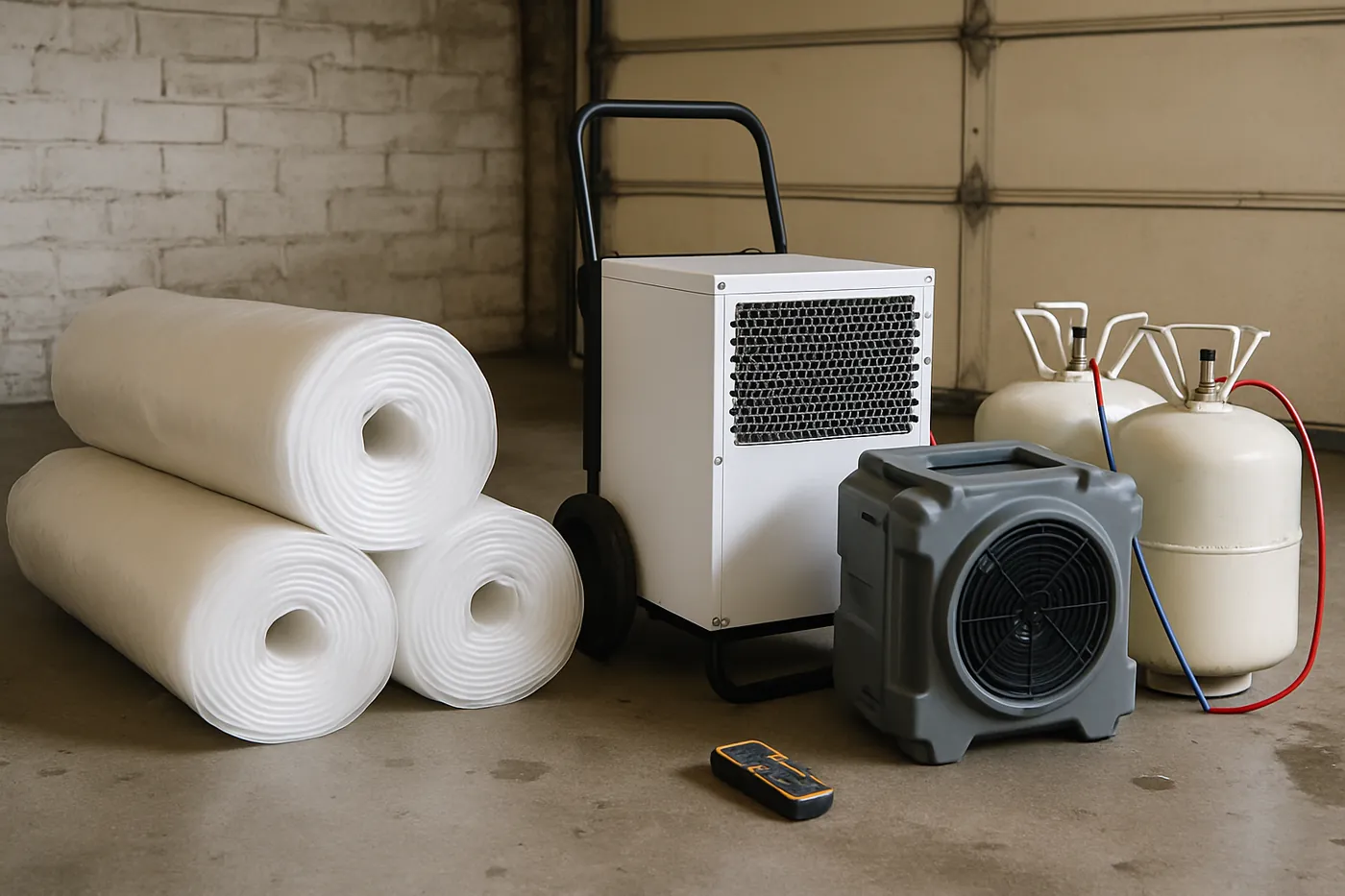
Containment first — barriers and negative air pressure, so what we disturb does not travel through the HVAC returns into rooms that were clean. Then removal: porous material the colony has rooted into comes out and gets bagged, because cleaning the surface of something that holds roots below it is theater. Non-porous surfaces get HEPA-vacuumed and wiped. Then drying to a measured target with meters on the wood.
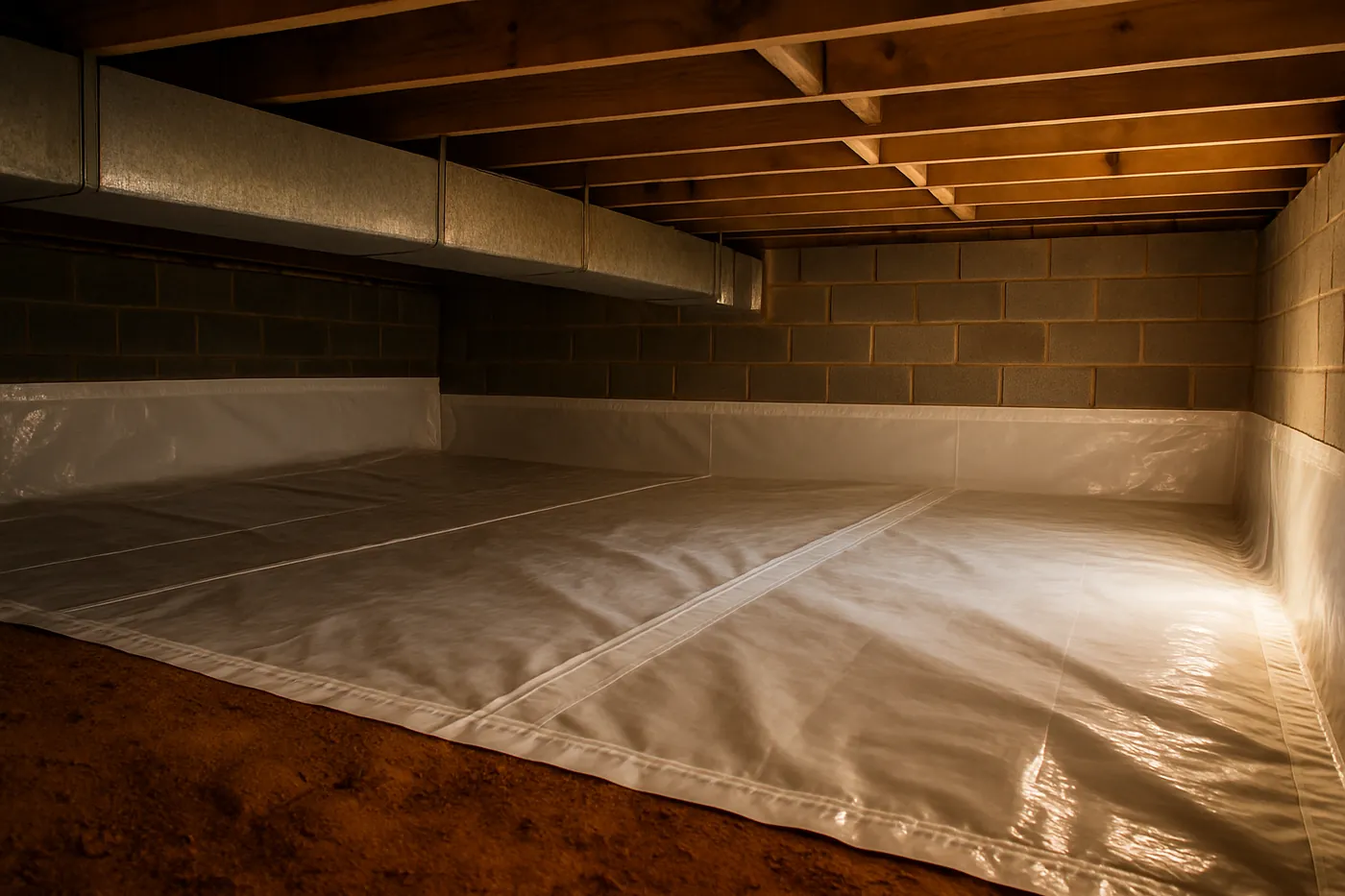
Then the coastal half most quotes skip: the space has to be given a way to stay dry when the weather will not help. That means sealing crawl space ground, correcting where storm water goes, and frequently mechanical dehumidification — because in a climate with no dry season, “it will air out” is not a plan.
What sets the price
| Job class | What it involves | Typical range | Time |
|---|---|---|---|
| Contained surface growth, one room | Containment, HEPA removal, drywall patch, source fix | $1,500–$3,000 | 1–2 days |
| Multi-room or growth into framing | Larger containment, material removal, structural drying | $3,000–$6,000 | 2–3 days |
| Dirt crawl space with barrier | Remediation plus ground sealing and dehumidification | $2,500–$9,000 | 2–4 days |
| Whole-home or subfloor replacement | Multiple zones, carpentry, full moisture system | $6,000–$15,000 | 4–10 days |
| Storm or burst-line water | Extraction first, then drying, then assessment | $1,000–$8,000 | 3–5 days |
How to read a Wilmington mold quote
Since the state certifies nobody, the paperwork is your protection. Three things separate a real scope from a number. It names the moisture source and prices the correction — not “address moisture,” but the actual crawl space ground, the storm water path, the failed flashing. It specifies containment and negative air, because skipping that redistributes your problem into clean rooms. And it states the standard: IICRC S520 is the one that exists. Ask about independent clearance testing too — the company doing the removal should not be the only one grading it.
Remediation questions, straight answers
What does mold remediation cost in Wilmington?
Most residential remediation runs $1,500-$6,000, with whole-home or structural jobs reaching $6,000-$15,000. Square footage of affected material, whether growth reached framing, and access set the number. On the coast the moisture correction is a larger share of the scope than inland, because the drying conditions never arrive on their own.
Does North Carolina license mold remediation?
North Carolina doesn't license mold remediation. North Carolina issues no mold-specific contractor license, which means the state certifies nobody for this work. Ask any company you call - including us - which written standard they follow. IICRC S520 is the industry document, and a firm that cannot name a standard is improvising.
Why does mold come back here after it was treated?
Because treatment is not correction. This coast offers no dry season - humidity stays high year-round, the water table sits close, and salt air holds moisture on surfaces. If the scope did not seal the ground, correct the water path, and give the space a way to dry, the colony returns to conditions that never changed.
Can I clean it myself?
Under roughly ten square feet on a hard, non-porous surface, with proper protection, yes. Beyond that, or anywhere it has rooted into drywall, insulation, or framing, containment matters. Disturbing a colony without negative air pressure distributes it through the house via the HVAC returns.
How long does the work take?
One to three days of active work for most residential jobs, plus drying time. Coastal drying frequently takes longer than inland because the outside air offers no help - dehumidification does the whole job, and the readings decide when equipment comes out.
Get a free Wilmington mold inspection
Tell us what you’re seeing — a musty smell near the floor, dark streaks on attic sheathing, staining on a wall, water standing against the foundation — and we’ll schedule an inspection that goes into the crawl space and the attic. We reply the same business day.